
Camping stove gas: Which type and size should you choose?
A guide to choosing camping stove gas, including screw-on canisters, summer and winter blends, and the right canister size for your trip.
The gas for your camping stove needs to suit the burner, the season and the length of your trip. This simple guide covers gas types, fuel blends and canister sizes for hiking in Denmark and Norway.
What types of camping gas canisters are available?
Screw-on canisters (Lindal valve system) — the outdoor standard
A screw-on canister has a threaded valve onto which the burner is screwed directly. It is the most common solution for modern outdoor stoves. The valve closes when the burner is removed, allowing the canister to be packed away and used again later.
Always check which connection your burner uses. A gas canister must be compatible with the burner, even if the canister looks like the right size.
Threadless valve canisters and pierceable canisters
Threadless valve canisters require a burner or adaptor that fits the valve. Pierceable canisters are opened when the burner is attached and should normally remain attached until the canister is empty. They are therefore less flexible on a hike than a screw-on canister, which can be removed between meals.
Summer, winter and four-season gas — what is the difference?
Primus sells Summer Gas, Power Gas and Winter Gas, among other blends. Summer Gas is made for warm conditions, Power Gas is a versatile option for many trips, and Winter Gas is designed for freezing temperatures. The manufacturer's temperature ratings are indicative because the burner, wind and canister temperature also affect performance.
Propane, isobutane and butane blends
Outdoor gas often consists of a blend of propane, isobutane and butane. Propane has a low boiling point and helps maintain pressure in cold conditions. Isobutane performs better at low temperatures than regular butane, while butane is particularly suitable for mild and warm weather.
How does gas perform in cold weather and at altitude?
When the canister gets cold, the pressure drops and the flame becomes weaker. The problem becomes more noticeable as the canister empties. Keep the canister dry and avoid placing it directly on snow or very cold ground. Altitude itself can make it easier for the gas to vaporise, but cold and wind can still significantly increase boiling time.
How much gas should you take?
Gas consumption depends on the efficiency of the burner, wind, temperature, cookware and the amount of water you boil. Plan around your own use and add a small safety margin.
Choosing the right size: 100 g, 230 g or 450 g
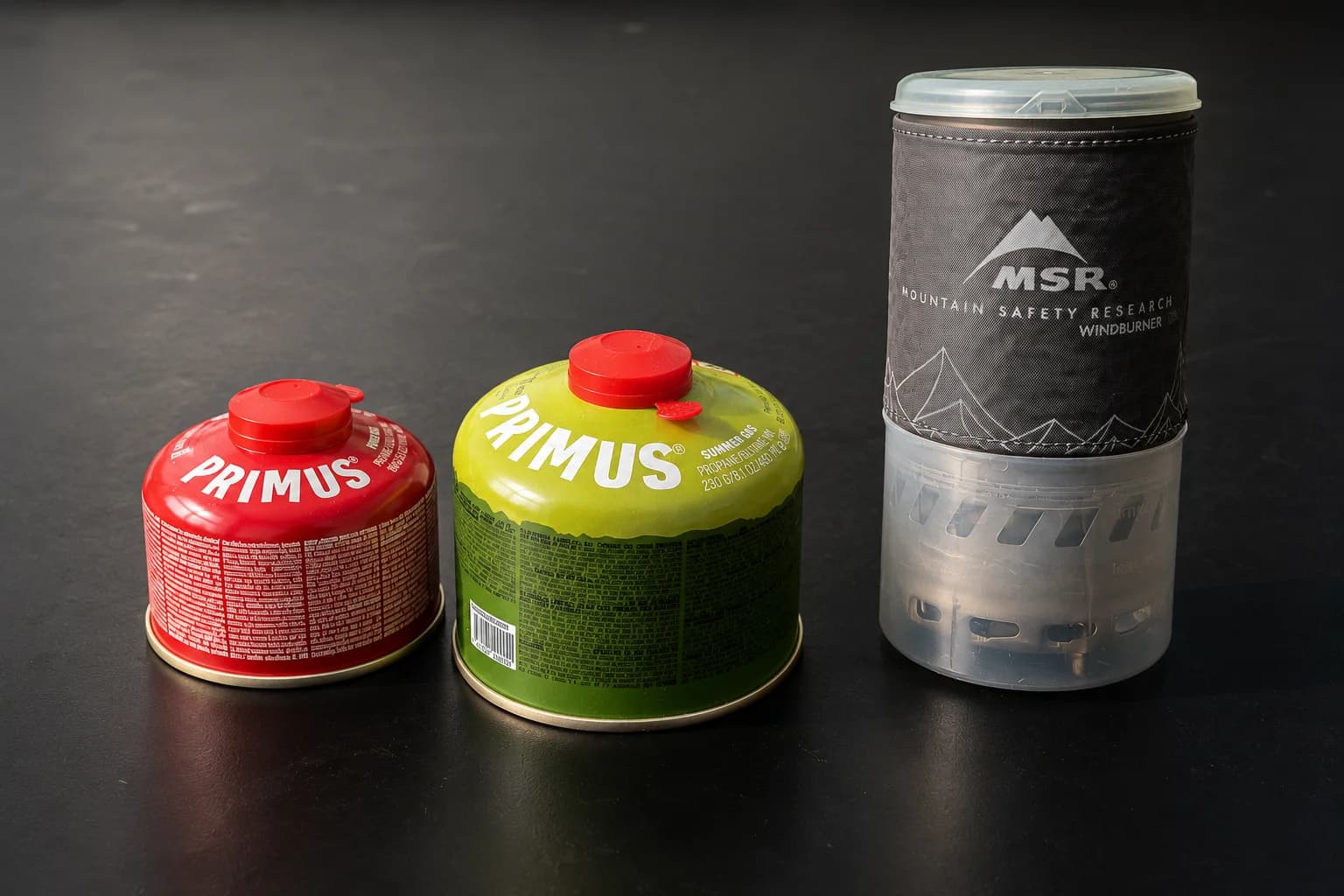
A 100 g canister is light and practical for a weekend trip. A 230 g canister is often a good choice for a longer solo trip or a shorter trip for two people. A 450 g canister provides more fuel but is also larger and heavier, making it best suited to longer trips, groups or a fixed campsite.
As a rough guide, a 100 g canister can boil around 10–12 litres of water, a 230 g canister around 25–30 litres, and a 450 g canister around 50–60 litres in good conditions. The range will be shorter in cold and windy weather.
How to calculate your daily gas consumption
Run a simple test at home before your trip:
- Weigh the gas canister before use.
- Boil the amount of water you normally use for coffee, breakfast and dinner.
- Weigh the canister again.
- Multiply the difference by the number of days in your trip, then add about 20 per cent as a reserve.
If you only boil water for coffee and freeze-dried meals, your consumption will typically be lower than when cooking food that needs to simmer.
Three useful tips when travelling with gas in Denmark and Norway
- Buy gas locally if your journey involves flying.
- Check the burner's valve type before buying a canister.
- Keep the gas canister away from high heat, direct sunlight and open flames.
Can you take gas on public transport or a plane?
Gas canisters are generally not permitted in passenger baggage on aircraft, including checked baggage. Rules for trains, buses and ferries can vary between operators and routes. Always check the operator's current rules before departure.
Storing gas canisters safely in your backpack
Remove the canister from the burner when it is not in use if the valve system is designed for this. Protect the valve from impact and pack the canister away from hot objects. Never use the burner inside a closed tent; inadequate ventilation creates a risk of fire and carbon monoxide poisoning.
Conclusion: Which gas is best for your next field note?
For most trips in Denmark and Norway, a screw-on canister with a versatile four-season blend is a good starting point. Choose 100 g for short trips, 230 g for several days, and 450 g when the length of the trip or the number of people requires the extra capacity. For winter use, choose a fuel blend and burner designed for low temperatures.